Flooring Guide
Tile vs. LVP for Georgia Kitchens & Mudrooms (Red Clay Tested)
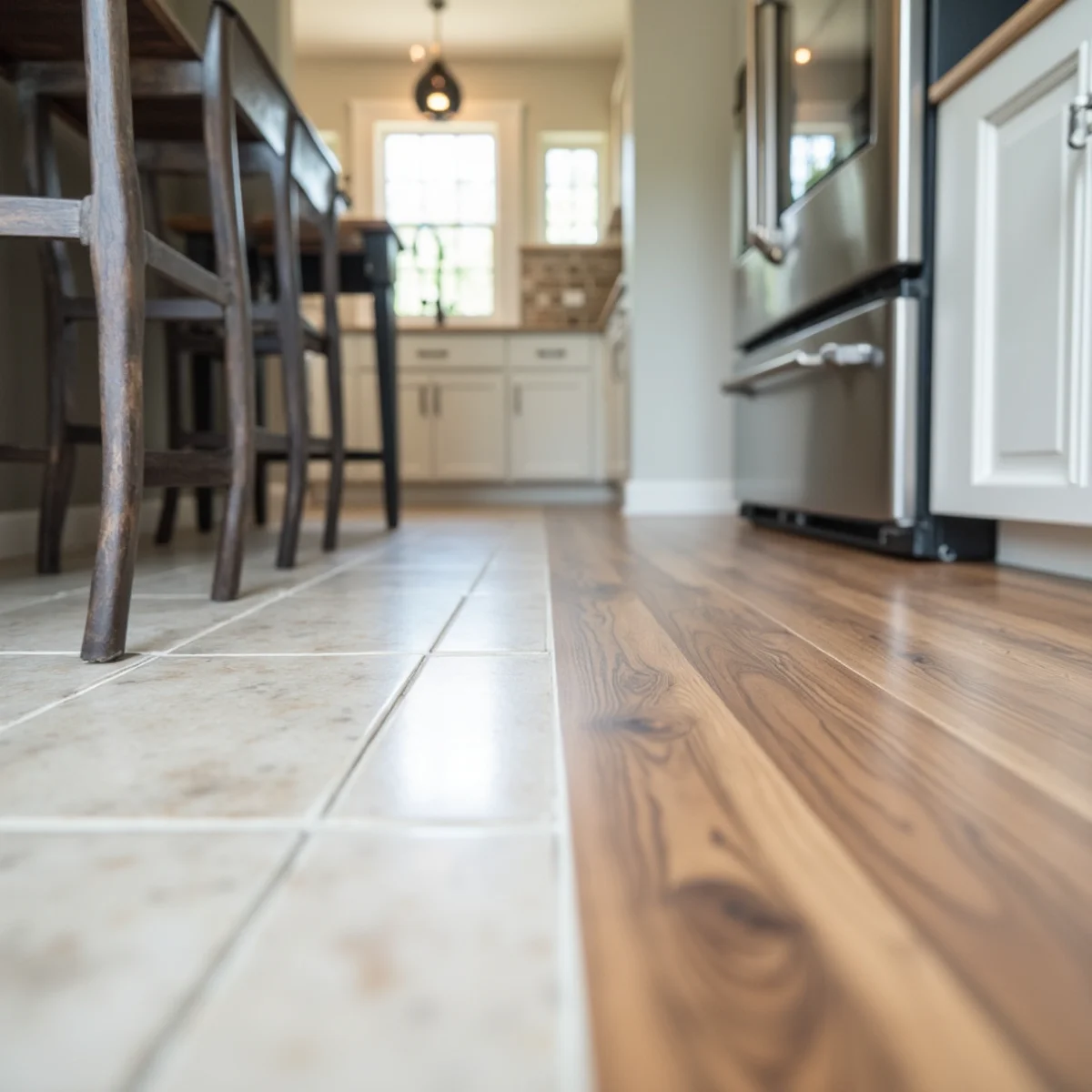
Kitchens and mudrooms take the most abuse of any floors in the house — spills, dropped pans, wet shoes, and in Georgia, a steady stream of red clay tracked in from the yard. When homeowners in Good Hope ask us whether to put down tile or LVP, the honest answer is that both are good choices, but they win in different situations. Here is how they actually compare where it counts.
The Red Clay Test
Georgia red clay is not ordinary dirt. It is fine, it stains, and it gets tracked in on every pair of shoes after rain. In a mudroom especially, your floor is going to meet clay constantly, so cleaning matters as much as looks.
- LVP: the smooth, sealed surface wipes clean of clay easily, with no grout lines to trap it.
- Tile: the tile face cleans fine, but grout lines catch red clay and can stain over time unless sealed and maintained.
On the pure red-clay-cleanup test, LVP has the edge because there is no grout to stain. Sealed grout and darker grout colors narrow the gap for tile, but grout maintenance is a real, ongoing chore in a Georgia mudroom.
Grout is where mudrooms get dirty
If your mudroom is the main clay entry point, either choose LVP or commit to sealing tile grout and picking a forgiving grout color. Light grout in a Georgia mudroom will show every footprint.
Water and Spills
Both materials handle water well, which is why they dominate kitchens. LVP is waterproof by design and shrugs off spills. Tile is waterproof on the surface, though water can reach the subfloor through grout if it is cracked or unsealed. For standing-water risk — a dishwasher leak, a mudroom that sees wet boots daily — both are far safer than hardwood or laminate.
Comfort, Durability, and Feel
This is where preferences split. Tile is harder, colder, and unforgiving — drop a glass and it shatters; stand at the sink for an hour and your feet feel it. LVP is warmer and softer underfoot, more comfortable for cooking, and easier on dropped dishes. But tile is more scratch- and heat-resistant over decades and is the more premium, permanent surface.
- Tile: hardest and most heat- and scratch-resistant; cold and hard underfoot.
- LVP: warmer, softer, quieter; excellent scratch resistance but can dent under very heavy point loads.
- Tile: can crack if the subfloor flexes or a heavy object drops.
- LVP: forgiving of impacts, faster and less disruptive to install.
Cost Comparison
Budget often decides it. In our area, LVP installed runs about $3.22 to $6.44 per square foot, while porcelain tile installed runs about $6.44 to $13.80 per square foot. Tile costs roughly double, largely because installation is more labor-intensive — proper substrate prep, setting, and grouting take skilled time. For a large kitchen or a whole mudroom-and-laundry run, that difference adds up fast.
Subfloor prep matters for both
Tile demands a rigid, flat substrate or it cracks. LVP demands a flat subfloor or the seams flex. In both cases, expect subfloor leveling of roughly two to five dollars per square foot where the floor is not already flat.
So Which Should You Choose?
For most Good Hope kitchens, LVP is the practical winner: waterproof, warm, easy to clean of red clay, and easier on the budget. Choose tile when you want a premium, ultra-durable surface for a high-traffic mudroom or an entry that sees the worst of the clay and you do not mind maintaining grout, or when you love the look and feel of stone and porcelain. Many homeowners even split the difference — tile in the mudroom drop zone, LVP flowing through the kitchen.
Maintenance Over the Years
Long-term upkeep is another point where these two materials diverge. LVP asks very little: sweep it, damp-mop it with a mild cleaner, and it keeps looking new for years. There is no sealing, no grout to scrub, and no special products required. That low-maintenance quality is a big part of why busy Georgia families gravitate to it for kitchens and mudrooms that see constant red-clay traffic.
Tile is extremely durable but the grout needs attention. To keep grout lines from staining with red clay, they should be sealed periodically, and in a heavy-use mudroom that maintenance is not optional if you want the floor to stay looking sharp. Neither material is high-maintenance compared with hardwood, but if you want the closest thing to a set-and-forget floor, LVP has the edge, while tile rewards a little ongoing care with a surface that can last for decades.
Get Help Choosing and Installing
The right floor depends on how your family uses the space and how much red clay comes through the door. Baxter Professional LLC installs both tile and LVP and will help you choose the best fit for your kitchen and mudroom in Good Hope and across the area. Call (844) 954-6342 for a free estimate.
Related Baxter Professional services
Frequently asked questions
LVP is easier to keep clean of red clay because it has no grout lines to stain, and it is warmer underfoot. Tile is more durable and premium but requires ongoing grout maintenance.
Tile costs roughly double to install but offers superior heat and scratch resistance and a permanent, premium surface. For most kitchens, LVP delivers most of the benefit for less money.
Both resist surface water well. LVP is fully waterproof; tile is waterproof on the surface but can let water reach the subfloor through cracked or unsealed grout.
Written by the Baxter Professional flooring crew
A locally owned, fully insured flooring contractor in Monroe, GA — installing, refinishing and repairing floors across Walton County for homeowners, landlords and businesses. Questions about your project? Meet the team or call (844) 954-6342 for a free estimate.
Keep reading
Fixing Cupped & Crowned Hardwood in Georgia's Summer Humidity
What causes hardwood cupping and crowning in Georgia summers, how to tell them apart, and the right way to fix the floor for good.
Squeaky Floors & Soft Spots: Subfloor Repair in Crawlspace Homes
Squeaks and soft spots are usually a subfloor story. Here is what is happening under Georgia crawlspace homes and how to fix it right.
Carpet to Hard Surface: The Smart Upgrade for 1980s-90s Subdivisions
Why owners of 1980s and 90s Georgia subdivision homes are pulling carpet for LVP, and what the conversion involves.