Flooring Guide
Fixing Cupped & Crowned Hardwood in Georgia's Summer Humidity
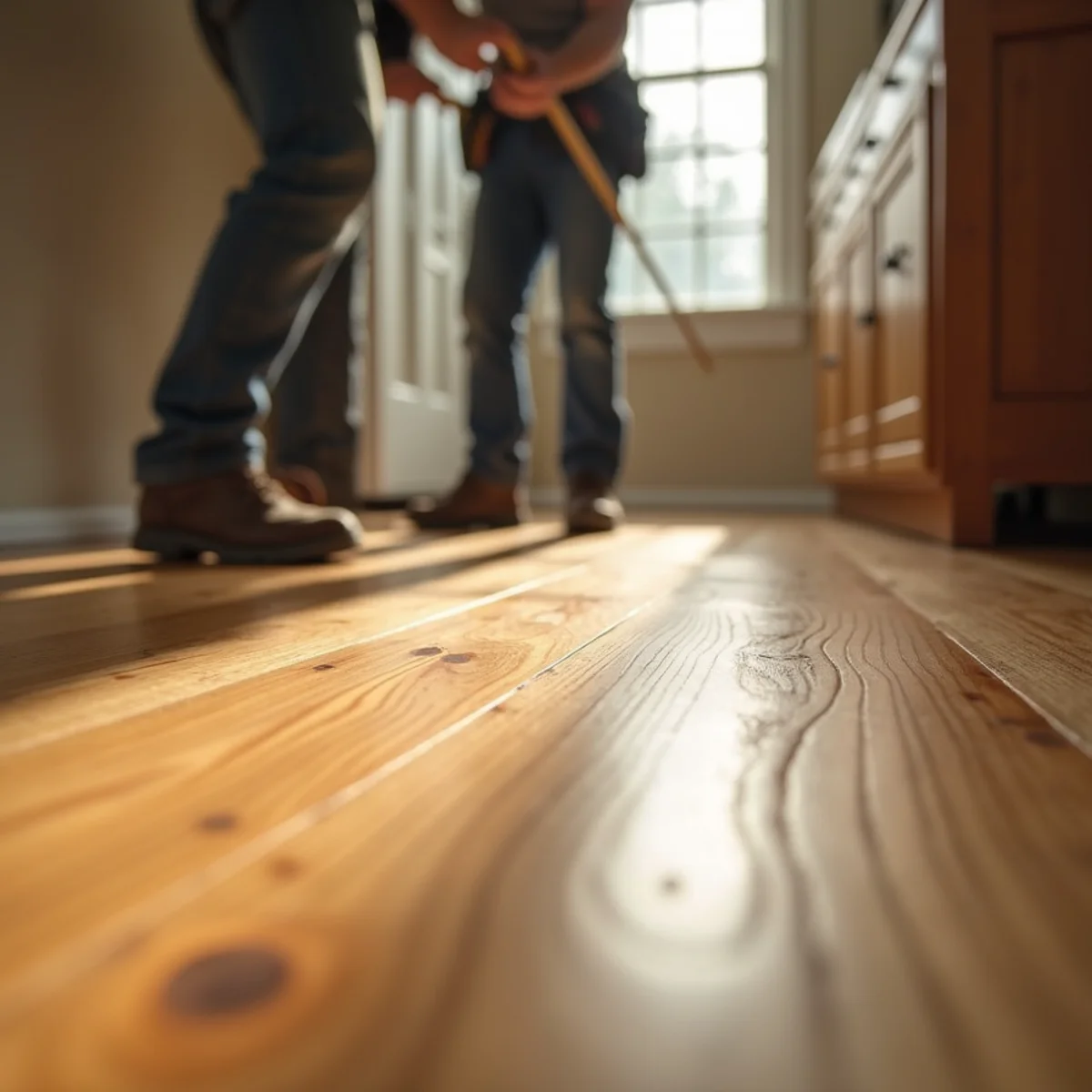
If your hardwood floor has developed a subtle washboard texture — edges of the boards raised higher than the centers — you are looking at cupping, and in Georgia it is almost always about moisture. Our summers are long and humid, our rain totals high, and hardwood is a natural material that moves with the air around it. The good news is that cupping is usually fixable. The key is fixing the cause, not just the symptom.
Cupping vs. Crowning: Know the Difference
These two terms describe opposite shapes, and they point to different moments in the same moisture story.
- Cupping: the edges of each board are higher than the center. This happens when the bottom of the board is wetter than the top — moisture coming up from a crawlspace or slab.
- Crowning: the center of each board is higher than the edges. This often appears when a cupped floor was sanded flat too soon, then dried out and reversed.
Never sand a cupped floor while it is still wet
Sanding cupped boards flat before they have dried is the classic mistake. When they finally release the moisture, the sanded edges drop and the floor crowns. Dry first, then sand.
Why It Happens So Often in Georgia
Wood swells when it absorbs moisture and shrinks when it dries. In Madison and across the region, three things gang up on hardwood: roughly 51 inches of annual rain, humid summers with highs near 89 degrees, and a lot of homes sitting over vented crawlspaces. When damp crawlspace air pushes moisture up into the underside of the boards while the conditioned room above stays drier, you get a moisture imbalance across the board — and that imbalance is exactly what cups a floor.
Spring is the worst season for it. March is our wettest month, and floors that were fine in the dry winter start to cup as humidity climbs.
Finding the Moisture Source
You cannot fix cupping without finding where the water is coming from. A proper diagnosis uses a moisture meter on the boards and, critically, an inspection of what is underneath.
- Measure moisture content in the flooring and compare top to bottom where possible.
- Inspect the crawlspace for standing water, wet soil, missing vapor barrier, or poor drainage.
- Check for plumbing leaks, HVAC condensation, or appliance drips above the affected area.
- Look at grading and gutters — red-clay yards that drain toward the house feed crawlspace moisture.
The fix starts under the house
A vapor barrier over crawlspace soil, better drainage, and controlled ventilation often solve cupping at the root. Refinishing a floor without addressing the crawlspace just resets the clock.
How the Repair Actually Works
Once the moisture source is corrected, the floor needs time. As the boards slowly return to a normal, stable moisture content, mild cupping often flattens on its own. This can take weeks, and rushing it is what causes crowning. Only after the floor has re-stabilized and moisture readings are back in the normal range should any sanding happen.
At that point, refinishing sands the floor flat, removes the surface irregularity, and reseals it. Severe cases where boards have permanently deformed, split, or rotted may need individual board replacement before refinishing. But for most humidity-driven cupping caught in time, drying plus refinishing restores the floor beautifully.
Keeping It From Coming Back
The long-term fix is climate control below and above the floor. A sealed or well-managed crawlspace, indoor humidity kept in a reasonable range with your HVAC, and good exterior drainage all keep hardwood stable through Georgia summers. Homeowners who address the crawlspace rarely see cupping return.
How Long Does the Whole Process Take?
Patience is the hardest part of fixing a cupped floor, because the drying phase cannot be rushed. Once the moisture source is corrected, the boards may need several weeks to release the excess moisture and return to a stable, normal moisture content. During that time the cupping gradually eases. Trying to shortcut this window by sanding early is exactly what produces crowning later, so a reputable contractor will monitor moisture readings over that period rather than schedule the sanding on a fixed date.
The refinishing itself, once the floor has stabilized, is a matter of days — sanding, any needed board replacement, and several coats of finish with cure time between them. So the honest timeline for a genuine humidity-driven cupping repair is often measured in weeks, not days, because most of it is the wood drying on its own schedule. It is worth the wait: a floor sanded flat while still wet looks fine for a month and then telegraphs every board edge as it crowns.
Get Your Cupped Floor Diagnosed
Cupping is a symptom with a cause, and treating it right means finding that cause first. Baxter Professional LLC diagnoses moisture problems, addresses the source, and refinishes cupped hardwood for homeowners in Madison and across the area. Start with a free estimate — call (844) 954-6342.
Related Baxter Professional services
Frequently asked questions
Often, yes — once the moisture source is fixed and the boards slowly dry back to a normal moisture content. Mild cupping frequently flattens over several weeks before any sanding is needed.
A moisture imbalance, usually humid air or water reaching the underside of the boards from a crawlspace or slab while the room above stays drier. Georgia summers make this common.
Not while it is still wet. Sanding a cupped floor before it dries causes it to crown when it finally releases moisture. The floor must dry and stabilize first.
Written by the Baxter Professional flooring crew
A locally owned, fully insured flooring contractor in Monroe, GA — installing, refinishing and repairing floors across Walton County for homeowners, landlords and businesses. Questions about your project? Meet the team or call (844) 954-6342 for a free estimate.
Keep reading
Squeaky Floors & Soft Spots: Subfloor Repair in Crawlspace Homes
Squeaks and soft spots are usually a subfloor story. Here is what is happening under Georgia crawlspace homes and how to fix it right.
Tile vs. LVP for Georgia Kitchens & Mudrooms (Red Clay Tested)
A practical, red-clay-tested comparison of tile versus LVP for Georgia kitchens and mudrooms, so you pick the right floor for the mess.
Carpet to Hard Surface: The Smart Upgrade for 1980s-90s Subdivisions
Why owners of 1980s and 90s Georgia subdivision homes are pulling carpet for LVP, and what the conversion involves.