Flooring Guide
Squeaky Floors & Soft Spots: Subfloor Repair in Crawlspace Homes
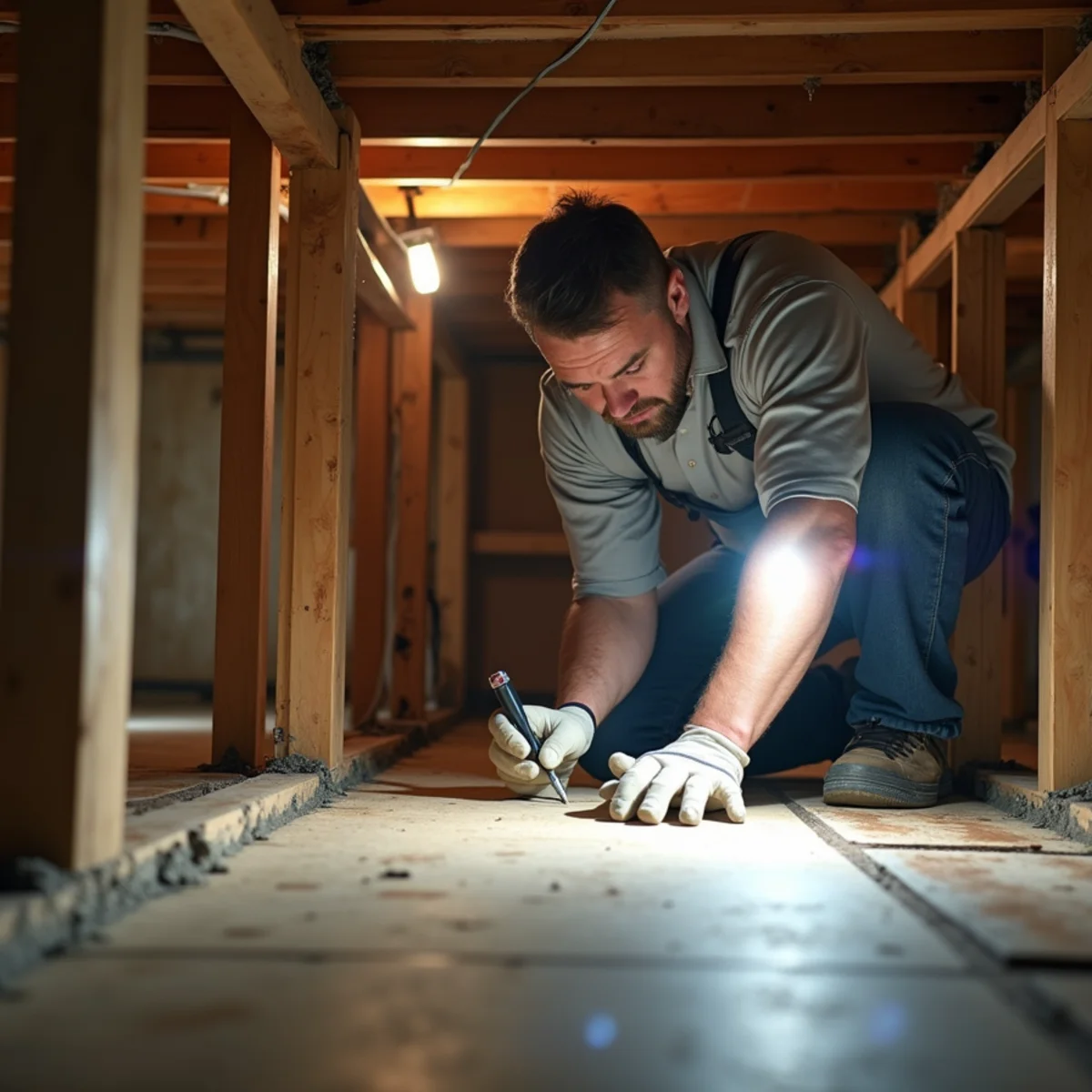
A squeak here and there is easy to ignore. A soft spot that flexes when you step on it is not — that is your floor telling you something is wrong underneath. In crawlspace homes around Campton and the rest of Walton County, both problems usually trace back to the same place: the subfloor and the framing below it. Here is what is actually happening and how it gets fixed for good.
What Makes a Floor Squeak
Squeaks are movement. When the subfloor separates slightly from the joists beneath it, the wood rubs against nails or against itself as you walk, and that friction is the sound you hear. Over years, nails loosen, wood shrinks and swells with the seasons, and gaps open up. It is annoying but often minor.
The fix for a simple squeak is re-securing the subfloor to the joist — screwing it down tight, sometimes from below in an accessible crawlspace, sometimes with adhesive between the layers. Done right, it lasts.
A squeak is minor. A soft spot is not.
Squeaks are usually cosmetic. A spot that sinks or feels spongy underfoot signals that the subfloor itself has weakened — and that means moisture or rot until proven otherwise.
Why Soft Spots Are Serious
A soft, spongy, or sagging area means the subfloor has lost its strength. In our climate, the usual culprit is moisture. Crawlspace humidity, a slow plumbing leak, or water intrusion soaks the plywood or OSB subfloor, it swells and delaminates, and eventually it rots. Left alone, a soft spot only grows, and in a bad case the joists below can rot too, turning a floor repair into a structural one.
This is why soft spots should never be simply covered with new flooring. Installing over a rotten subfloor guarantees the new floor fails and hides a problem that keeps spreading.
The Georgia Crawlspace Problem
Crawlspace homes are common across Walton County, and our climate is tough on them. With roughly 51 inches of rain a year and long humid summers, a vented crawlspace pulls damp air under the house all season. Add red-clay soil that drains poorly and grading that sometimes slopes toward the foundation, and the crawlspace stays wet. That moisture rises straight into the subfloor.
- Missing or torn vapor barrier over bare crawlspace soil.
- Standing water or chronically damp ground after rain.
- Poor drainage and gutters dumping next to the foundation.
- Inadequate ventilation trapping humid air.
- Old plumbing leaks that went unnoticed for years.
Fix the moisture or repeat the repair
Replacing rotten subfloor without correcting the crawlspace moisture that caused it is a temporary fix. The new plywood rots too. Address drainage, the vapor barrier, and ventilation as part of the job.
How Subfloor Repair Is Done Right
A proper subfloor repair starts with diagnosis from below. In an accessible crawlspace, we inspect the underside of the subfloor and the joists, check moisture readings, and find the water source. Then the repair follows a logical order:
- Identify and stop the moisture source — leak, drainage, or crawlspace humidity.
- Dry the area and verify with a moisture meter that the framing is back in range.
- Cut out and replace rotted or delaminated subfloor and any compromised joists.
- Re-secure sound subfloor to eliminate squeaks and flex.
- Address the crawlspace — vapor barrier, drainage, ventilation — to prevent recurrence.
Only after the subfloor is solid and dry does new flooring go down. That sequence is what separates a lasting repair from one that fails in a year. Subfloor repair and leveling of this kind commonly runs a few dollars per square foot on top of the finished flooring, depending on how much has to be replaced.
Can You Fix a Squeak Yourself?
A single nagging squeak is one of the few floor problems a handy homeowner can sometimes tackle. If you can reach the spot from an accessible crawlspace, a squeak often comes from a small gap between the subfloor and a joist, and driving a shim with construction adhesive into that gap — or adding a screw to pull the subfloor tight — can silence it. From above, specialty squeak-repair kits let you drive scored screws through carpet or hardwood and snap the heads off below the surface.
The important caveat is that these fixes only address movement, not moisture. If the squeak is coming from an area that also feels soft or spongy, stop — you are past a DIY squeak and into subfloor damage that needs to be diagnosed, not covered up. In a crawlspace home in our climate, a new squeak in a spot that used to be quiet can be an early sign that moisture is beginning to work on the subfloor, and that is worth a professional look before it becomes a soft spot.
Do Not Wait on a Soft Spot
Soft spots grow, and a small subfloor repair today is far cheaper than a structural one later. Baxter Professional LLC inspects crawlspaces, repairs damaged subfloors, and fixes squeaks and soft spots for homeowners in Campton and across Walton County. Call (844) 954-6342 for a free estimate.
Related Baxter Professional services
Frequently asked questions
Usually not on their own — squeaks are typically just the subfloor moving against nails. A soft or spongy spot is the serious sign, pointing to moisture damage or rot underneath.
Often yes. In an accessible crawlspace, squeaks and some subfloor issues can be addressed from below. Rotted sections usually require replacing the subfloor from above.
Moisture. Crawlspace humidity, poor drainage, or a leak soaks the subfloor, which swells, delaminates, and eventually rots. Fixing the moisture source is essential to a lasting repair.
Written by the Baxter Professional flooring crew
A locally owned, fully insured flooring contractor in Monroe, GA — installing, refinishing and repairing floors across Walton County for homeowners, landlords and businesses. Questions about your project? Meet the team or call (844) 954-6342 for a free estimate.
Keep reading
Fixing Cupped & Crowned Hardwood in Georgia's Summer Humidity
What causes hardwood cupping and crowning in Georgia summers, how to tell them apart, and the right way to fix the floor for good.
Tile vs. LVP for Georgia Kitchens & Mudrooms (Red Clay Tested)
A practical, red-clay-tested comparison of tile versus LVP for Georgia kitchens and mudrooms, so you pick the right floor for the mess.
Carpet to Hard Surface: The Smart Upgrade for 1980s-90s Subdivisions
Why owners of 1980s and 90s Georgia subdivision homes are pulling carpet for LVP, and what the conversion involves.