Flooring Guide
Slab Moisture in New Walton & Jackson County Builds: Test Before LVP
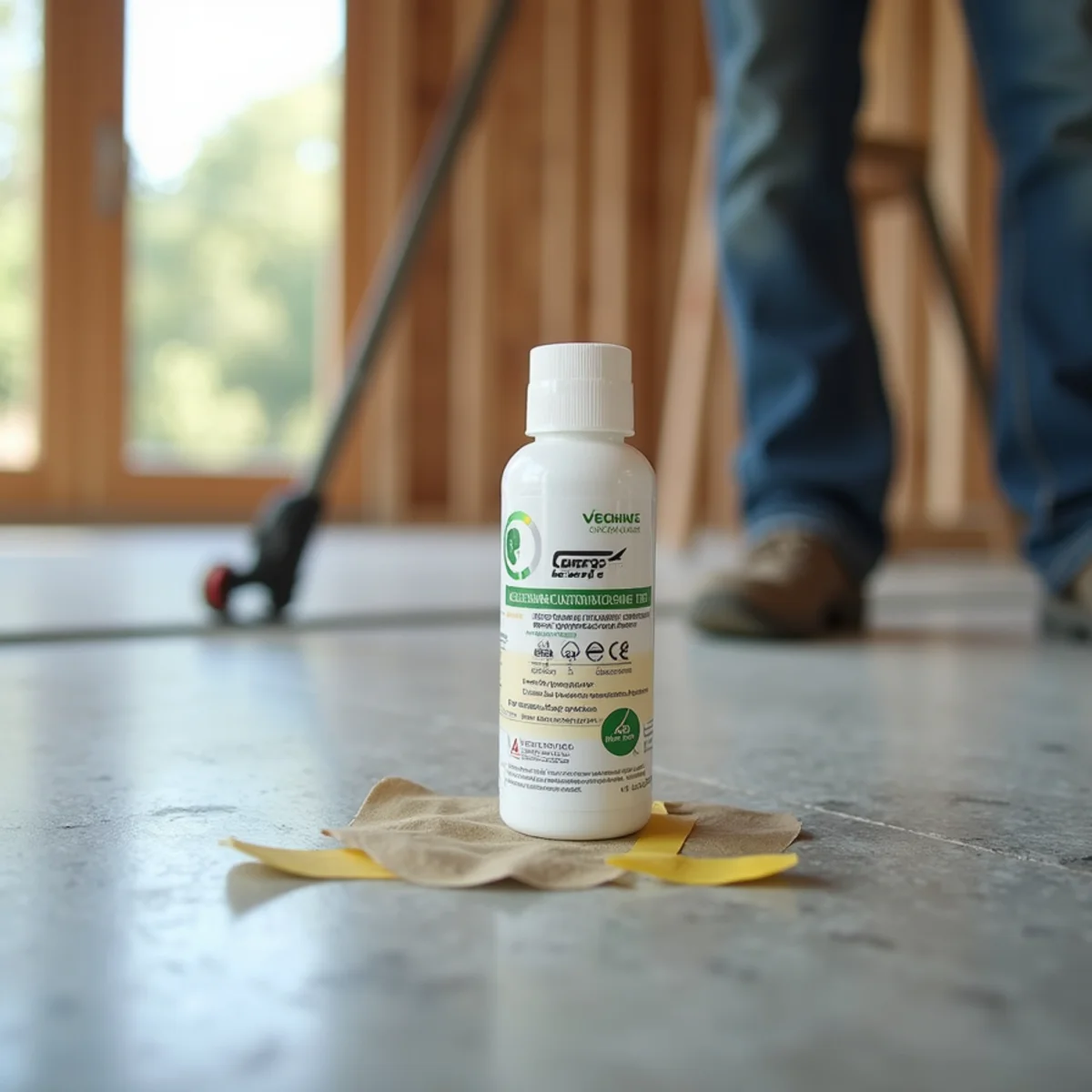
The building boom across Walton and Jackson counties has put a lot of new homes on the ground around Jefferson, and most of them are slab-on-grade with LVP going down over concrete. It is a great combination — until someone skips the moisture test. New concrete holds an enormous amount of water, and installing a floor before the slab has dried is one of the most common and expensive mistakes in new construction.
Why New Slabs Are Full of Water
Concrete is mixed with water, and it releases that moisture slowly for a long time as it cures. A slab can look and feel dry on top while still holding significant moisture deep inside. The rule of thumb the trade uses is roughly a month of drying for every inch of slab thickness under good conditions — and Georgia’s humidity and rain slow that down further. A slab poured in a wet spring, with March being our wettest month, may need considerably longer than the schedule allows.
Dry to the touch is not dry enough
A slab surface can feel bone dry while the concrete below still reads far too wet for flooring. Only a proper moisture test tells you the truth, and it is the test builders under schedule pressure most often skip.
What Happens When You Skip the Test
Trapped slab moisture has nowhere to go once a floor covers it, and it causes real damage:
- Adhesive failure — glue-down LVP loses its bond as moisture and alkalinity attack the adhesive.
- Cupping, gaps, and lifting as vapor pushes up against the planks.
- Mold and mildew growing in the dark, damp space beneath a floating floor.
- A musty smell that appears months after move-in.
- A failed floor that has to be torn out and reinstalled — on the homeowner’s dime once the builder warranty lapses.
The cruel part is the timeline. These failures often show up six months to a year after installation, long after everyone assumed the floor was fine.
How Slab Moisture Testing Works
Professional moisture testing is not guesswork. There are established methods that give real numbers a contractor can act on.
- Relative humidity (RH) in-situ probes — sensors placed in holes drilled into the slab measure the moisture deep inside, where it matters most. This is the gold standard.
- Calcium chloride tests measure the rate of moisture vapor emission from the surface.
- Surface moisture meters give a quick screening read but do not replace in-situ testing.
The results are compared to the flooring and adhesive manufacturer’s limits. If the slab reads too wet, the fix is either more drying time or a moisture-mitigation system — a topical vapor barrier that seals the slab so the floor can go down safely.
Testing protects your warranty
Most LVP and adhesive warranties require the slab to be within stated moisture limits. Installing without documented testing can void the warranty and leave you holding the bill for a failure.
The Right Way to Floor a New Slab
For new construction in our area, the sequence is straightforward but non-negotiable. Let the slab cure, test its moisture properly, and only proceed when the numbers are within spec — or install a moisture-mitigation barrier if the schedule cannot wait for the slab to dry naturally. A contractor who understands new-construction flooring builds this step into the plan instead of treating it as optional.
For builders, the small cost of testing is nothing against a callback to replace a whole home’s floors. For homeowners buying new, it is worth asking whether the slab was tested before your floors went in.
Acclimation and Ambient Conditions Matter Too
Slab moisture gets most of the attention, but two related conditions round out a proper new-construction install. The first is acclimation: LVP should sit in the space where it will be installed for a period beforehand so it adjusts to the room’s temperature and humidity. Planks installed straight off a cold truck into a conditioned house can expand or contract after the fact, opening gaps or peaking at the seams. Manufacturers specify acclimation time for a reason, and skipping it is a common shortcut on rushed new builds.
The second is ambient conditions during and after installation. The home’s HVAC should be running and holding a normal temperature and humidity before the floor goes down, not switched on for the first time after closing. Installing in an unconditioned new house — sweltering in a Georgia summer or damp during a wet spring — sets the floor up to move once the family finally turns on the air. Getting the slab, the planks, and the room all into a stable state is what makes a new floor stay flat.
Do It Right the First Time
A new slab and new LVP should last for decades — but only if the concrete was dry enough when the floor went down. Baxter Professional LLC provides slab moisture testing and new-construction flooring for builders and homeowners in Jefferson and across Walton and Jackson counties. Call (844) 954-6342 for a free estimate.
Related Baxter Professional services
Frequently asked questions
A common guideline is about a month of drying per inch of slab thickness under good conditions, but Georgia humidity slows it. Only a moisture test confirms the slab is ready.
In-situ relative humidity probes drilled into the slab are the industry standard because they measure moisture deep inside. Calcium chloride and surface meters are useful supplements.
A topical moisture-mitigation system — a vapor barrier applied to the slab — seals in the moisture so flooring can be installed safely without waiting for full natural drying.
Written by the Baxter Professional flooring crew
A locally owned, fully insured flooring contractor in Monroe, GA — installing, refinishing and repairing floors across Walton County for homeowners, landlords and businesses. Questions about your project? Meet the team or call (844) 954-6342 for a free estimate.
Keep reading
Heart Pine Floor Restoration in Georgia's Mill & Antebellum Homes
What it takes to restore original heart pine floors in Georgia’s historic mill and antebellum homes without destroying their character.
Why Georgia Red Clay Ruins Floors - and the Waterproof Fix
How Georgia red clay damages floors from above and below, and why waterproof flooring is the practical fix for homes in clay country.
Crawlspace Moisture: The Hidden Floor Killer in Pre-1990 Georgia Homes
How crawlspace moisture silently destroys subfloors and hardwood in pre-1990 Georgia homes, plus the warning signs and the fix.