Flooring Guide
Crawlspace Moisture: The Hidden Floor Killer in Pre-1990 Georgia Homes
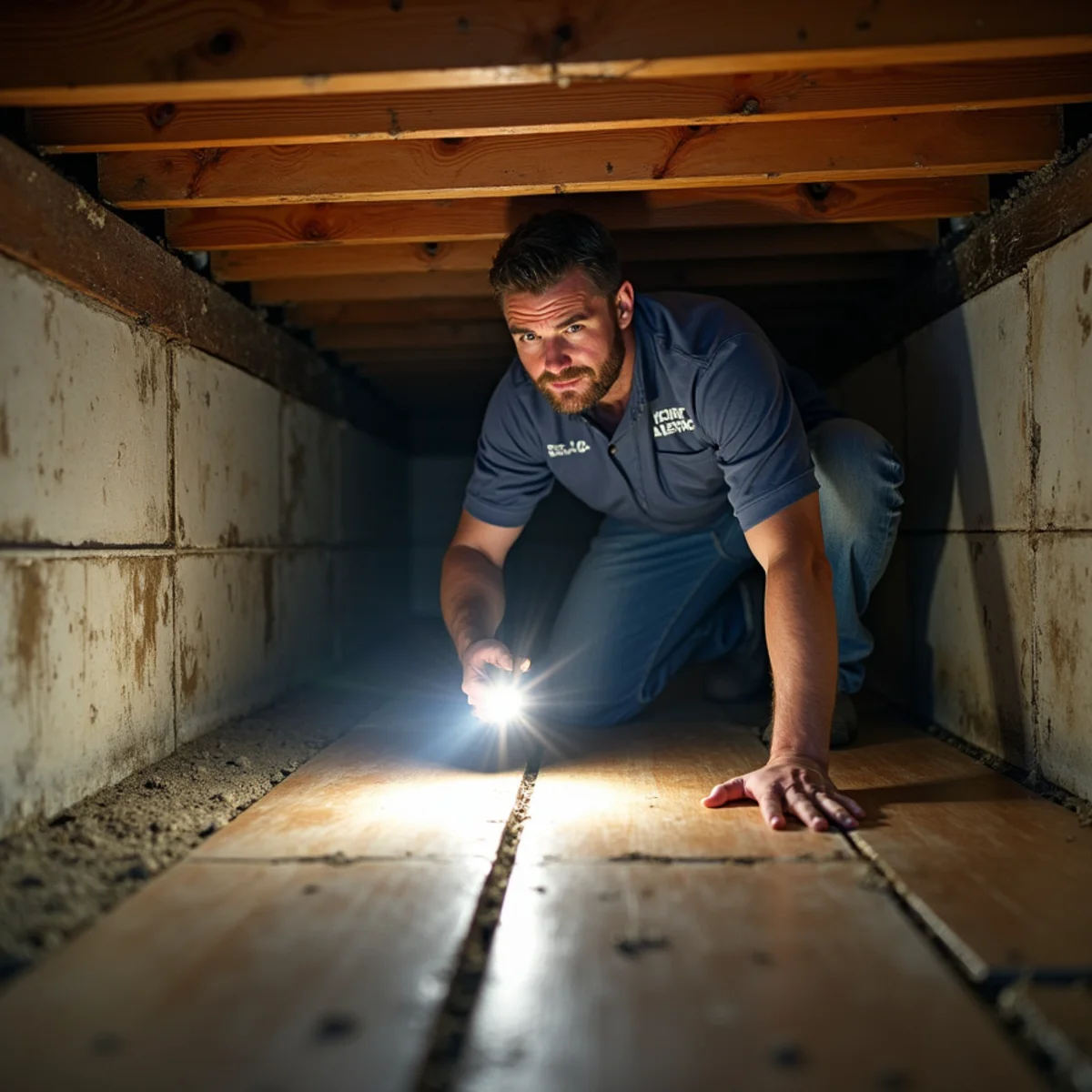
The most damaging thing to your floors is often the part of the house you never see. In pre-1990 Georgia homes — and there are plenty around Maysville and the surrounding countryside — a vented crawlspace with bare dirt and poor drainage is a slow-motion floor killer. It does its work quietly, over years, until a soft spot or a musty smell finally gives it away. By then the subfloor is usually rotting. Here is how it happens and how to stop it.
How Crawlspace Moisture Attacks Floors
A traditional crawlspace is vented to the outside, based on the old idea that outdoor air keeps it dry. In the humid Southeast, that logic backfires. Warm, moisture-laden Georgia air flows into the cooler crawlspace and condenses on the framing and the underside of the subfloor. Add bare soil with no vapor barrier, and moisture evaporates up from the ground continuously. The subfloor and joists stay damp, and damp wood is wood that rots.
Our climate makes it worse than most places: roughly 51 inches of rain a year, long summers with highs near 89 degrees, and heavy spring rains that keep the ground saturated. A crawlspace here works against your floors nearly year-round.
The damage is invisible until it is not
Crawlspace rot happens out of sight. Most homeowners have no idea anything is wrong until a floor feels soft, a smell appears, or hardwood starts to cup — stages that mean the damage is already advanced.
Warning Signs to Watch For
Because you cannot see the crawlspace day to day, learn the signals that show up in the living space:
- Soft, spongy, or sagging spots in the floor.
- Hardwood that cups, crowns, or develops gaps.
- A persistent musty or earthy smell, especially near the floor.
- Squeaks and creaks that were not there before.
- Increased indoor humidity and, in bad cases, mold on baseboards or in closets.
- Higher energy bills as damp air makes the HVAC work harder.
What You Find When You Look
A crawlspace inspection in an older home often reveals a familiar set of problems. Any one of them feeds moisture into your floors:
- No vapor barrier, or a torn and ineffective one over bare soil.
- Standing water or chronically wet ground after rain.
- Grading and gutters channeling water toward the foundation — worse in slow-draining red clay.
- Rotted or delaminated subfloor and darkened, deteriorating joists.
- Rusted fasteners and, sometimes, mold on the wood.
Red clay makes drainage critical
Georgia clay drains slowly, so water lingers around foundations and under houses. Getting water away from the home with grading and gutters is half the battle for a dry crawlspace.
The Fix: Stop the Moisture, Then Repair the Floor
Repairing floor damage without fixing the crawlspace is throwing money away — the new wood rots just like the old. The right sequence tackles the source first.
- Improve exterior drainage — grade soil away from the house and direct gutters well clear of the foundation.
- Install a proper vapor barrier over the crawlspace soil, and consider sealing and conditioning the space.
- Address ventilation and humidity so the framing can dry and stay dry.
- Replace rotted subfloor and any compromised joists once conditions are corrected.
- Install or refinish the finished floor last, on a sound and dry base.
Emergency subfloor repair handles the structural damage, but the lasting fix is controlling the moisture that caused it. Homeowners who do both rarely see the problem return.
Encapsulation vs. Traditional Venting
The old approach to crawlspaces — open foundation vents to let outside air circulate — was designed for drier climates and works against homes in the humid Southeast. On a muggy Georgia day, those vents pull warm, moisture-heavy air into a cooler crawlspace where it condenses on the framing and subfloor. That is why more homeowners here are moving toward encapsulation: sealing the crawlspace with a heavy vapor barrier across the floor and up the walls, closing the vents, and controlling humidity with a dedicated dehumidifier.
A full encapsulation is a larger project than simply laying a vapor barrier, but the principle scales. At minimum, bare soil should be covered with a good vapor barrier and exterior water should be graded away from the foundation. Where moisture problems are persistent, sealing and conditioning the space is the modern fix that keeps the subfloor dry for good, season after Georgia season. Whichever level you choose, the goal is the same — stop humid air and ground moisture from feeding the wood above.
Catch It Before It Spreads
If your older home has any of the warning signs, do not wait for the floor to give way. Baxter Professional LLC inspects crawlspaces, repairs moisture-damaged subfloors, and addresses the conditions behind the damage for homeowners in Maysville and across the area. Call (844) 954-6342 for a free estimate.
Related Baxter Professional services
Frequently asked questions
Watch for soft spots, cupping hardwood, musty smells, new squeaks, and rising indoor humidity. These signs in the living space usually mean moisture is already at work below.
In our humid climate, open vents often let in moist air that condenses under the house. Many homes do better with a sealed vapor barrier and controlled conditions than with open venting.
You can, but if the crawlspace moisture is not corrected, the new subfloor will rot too. Fixing drainage, adding a vapor barrier, and controlling humidity are essential to a lasting repair.
Written by the Baxter Professional flooring crew
A locally owned, fully insured flooring contractor in Monroe, GA — installing, refinishing and repairing floors across Walton County for homeowners, landlords and businesses. Questions about your project? Meet the team or call (844) 954-6342 for a free estimate.
Keep reading
Heart Pine Floor Restoration in Georgia's Mill & Antebellum Homes
What it takes to restore original heart pine floors in Georgia’s historic mill and antebellum homes without destroying their character.
Why Georgia Red Clay Ruins Floors - and the Waterproof Fix
How Georgia red clay damages floors from above and below, and why waterproof flooring is the practical fix for homes in clay country.
Slab Moisture in New Walton & Jackson County Builds: Test Before LVP
Why new-construction slabs in Walton and Jackson counties must be moisture-tested before LVP, and what happens when they are not.