Flooring Guide
Hardwood Refinishing vs. Replacement: Real Costs for Georgia Homes
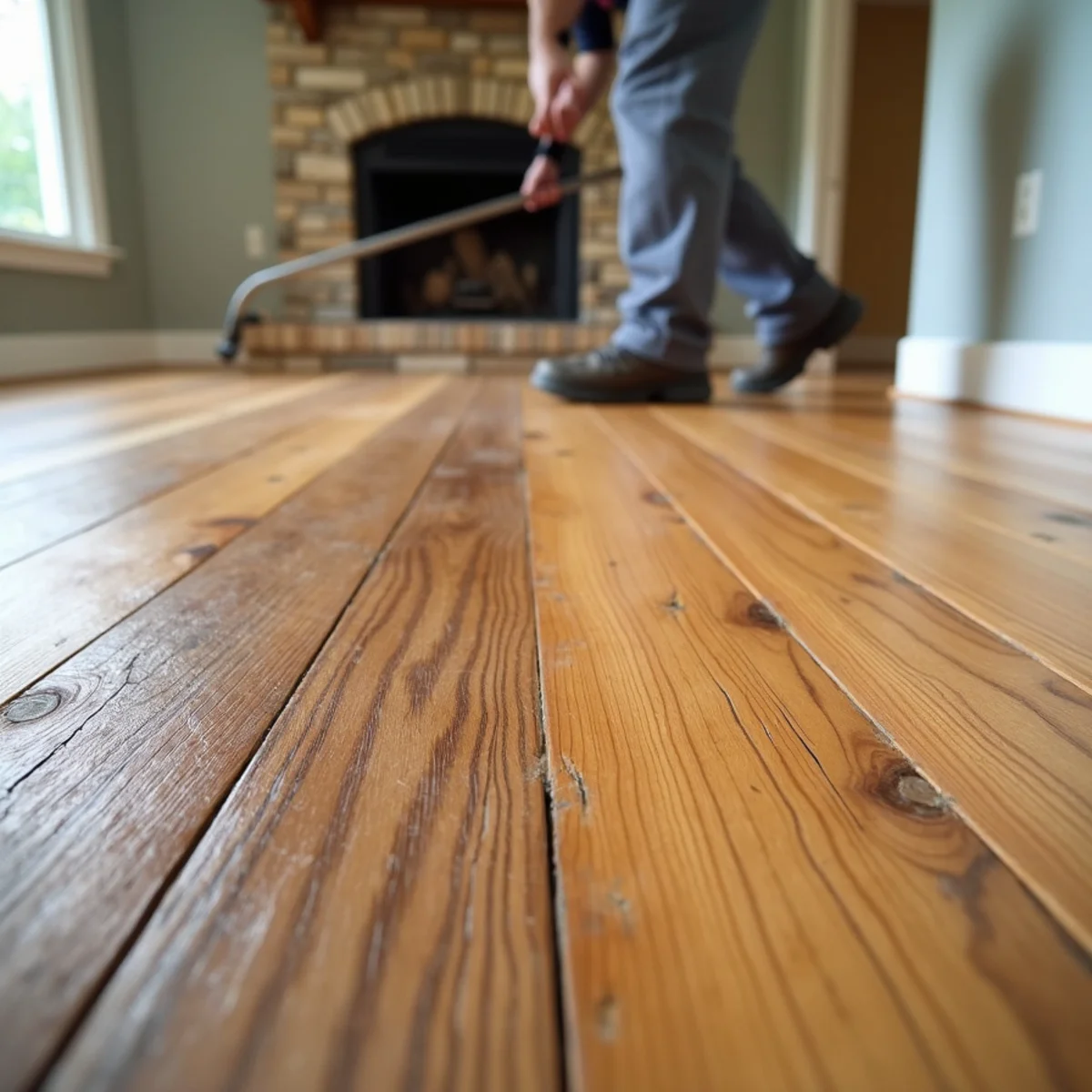
Worn hardwood is a good problem to have — it usually means you have real wood floors worth saving. The decision is whether to refinish what you have or tear it out and start over. The right answer comes down to the condition of the boards and the math, and for most Georgia homeowners, refinishing wins when the wood allows it.
Here is a straight comparison of refinishing versus replacement for homes in Decatur and the surrounding area.
The Cost Gap Is Large
Start with the money, because it frames everything. Replacing solid hardwood in this market commonly runs about $7.36 to $16.56 per square foot installed, and Monroe-area hardwood overall can span roughly six to twenty-two dollars per square foot once species and grade are factored in. Refinishing existing hardwood costs a fraction of that — you are paying for labor and finish, not new material — which is why it is almost always the cheaper path when the wood is sound.
Refinishing keeps the wood you paid for
Original solid hardwood is often higher quality than what is affordable to install new today. Refinishing preserves character and value that replacement throws away.
When Refinishing Is the Right Call
Refinishing sands away the old finish and a thin layer of wood, then re-stains and reseals. It is the right choice when the boards themselves are structurally fine and just look tired.
- Surface scratches, dullness, and worn finish.
- Light to moderate cupping that has flattened back out after a humidity issue was corrected.
- Outdated stain color you want to change.
- Solid hardwood, or engineered hardwood with a thick-enough wear layer to sand.
- Minor gaps and squeaks that come with age.
Solid hardwood can typically be refinished several times over its life. That is a huge advantage — you can refresh the floor now and still have sanding life left for the future.
When Replacement Is Unavoidable
Sometimes the wood is past saving, and forcing a refinish just delays the inevitable. Replacement is the honest answer when:
- Boards are rotted, deeply water-stained, or actively cupped from ongoing moisture.
- The floor has already been sanded down near the tongue and cannot take another pass.
- There is extensive termite or subfloor damage below the boards.
- Engineered flooring has a wear layer too thin to sand.
- You want to switch to a different material entirely, like LVP over a slab.
Georgia humidity forces the issue
Our climate — heavy rain and long humid summers — is hard on wood over damp crawlspaces. If moisture has crowned or rotted the boards, refinishing over the problem only wastes money. Fix the moisture source first.
The Hidden Variable: Your Subfloor and Crawlspace
In Decatur and across the region, a lot of older homes sit over crawlspaces, and that changes the calculation. If the reason your floors look bad is moisture rising from below, neither refinishing nor new flooring will last until the underlying humidity is addressed. A good contractor checks moisture and the crawlspace before recommending either option, because the floor is only as stable as what it sits on.
How to Decide
Walk through three questions. First, are the boards structurally sound, or are they rotted and crowned? Second, is there enough wood left to sand — solid hardwood almost always yes, thin engineered maybe not? Third, is there an active moisture problem that has to be solved regardless? If the boards are sound and there is sanding life left, refinishing is usually the smart, economical choice.
What Refinishing Day Actually Looks Like
Homeowners deciding between refinishing and replacement often want to know what refinishing involves day to day. The room is cleared, and the crew sands the floor in stages with progressively finer grits, working down through the old finish and any surface damage. Modern sanders are attached to dust-containment systems, so the process is far cleaner than the plaster-dust nightmare people remember from decades ago, though some fine dust is unavoidable. After sanding, the floor is stained if you are changing color, then sealed with several coats of finish, each of which needs time to dry between passes.
The disruption is real but manageable. You will want to be out of the finished rooms during the finish and its cure, and the fumes from an oil-based finish mean planning for ventilation — water-based finishes cure faster and smell less, which many Georgia homeowners prefer. Compared with a full replacement, which involves tear-out, disposal, and days of installation, refinishing is usually the shorter and less invasive project, one more point in its favor when the boards are sound.
Get an Expert Eye on Your Floors
The difference between a floor worth refinishing and one that needs replacing is often invisible to an untrained eye. Baxter Professional LLC will inspect your hardwood, check moisture and subfloor conditions, and give you an honest recommendation for homes in Decatur and across the area — starting with a free estimate. Call (844) 954-6342.
Related Baxter Professional services
Frequently asked questions
Almost always, because you pay for labor and finish rather than new material. Replacement only wins when the boards are rotted, crowned, or too thin to sand again.
Solid hardwood can typically be sanded and refinished several times across its life. Engineered hardwood depends on wear-layer thickness and may allow only one light refinish.
If the cupping has flattened after the moisture source was corrected, yes. If the boards are still actively cupped or crowned from ongoing humidity, the moisture must be fixed first.
Written by the Baxter Professional flooring crew
A locally owned, fully insured flooring contractor in Monroe, GA — installing, refinishing and repairing floors across Walton County for homeowners, landlords and businesses. Questions about your project? Meet the team or call (844) 954-6342 for a free estimate.
Keep reading

How Much Does Flooring Installation Cost in Monroe, GA? (2025 Guide)
A realistic 2025 guide to what flooring installation costs in Monroe, GA — by material, by project size, and what drives the price up or down.
Does Homeowners Insurance Cover Water-Damaged Floors in Georgia?
A plain-English guide to when Georgia homeowners insurance covers water-damaged floors, the flood exclusion, and how to protect your claim.
What Does LVP Installation Cost in Walton & Gwinnett Counties?
A clear cost breakdown for luxury vinyl plank installation in Walton and Gwinnett counties, including the prep costs that move the final number.